A Miami aerospace company is proposing autonomy, machine vision, and secure-network concepts across the services, all built on one rule: when a machine acts, people must be able to see why.
A military autonomous system that cannot explain itself cannot be trusted with a mission. This is not a new idea. It is how serious militaries have always worked. Pilots debrief. Commanders review. Investigators pull the flight recorder. The machines now joining the force have to meet the same standard as the people beside them.
That standard is about to matter more than ever. On September 30, 2026, Secretary of War Pete Hegseth announced Autonomous Warfare Command, or AUTOWARCOM, a four-star combatant command built to scale drones, robotics, and AI across the joint force. It is the first new combatant command since U.S. Space Command in 2019. It is the right call. Drone warfare is reshaping battlefields right now, and autonomy deserves one command that owns it.
Scale brings a simple requirement. When thousands of autonomous systems act in the field, someone has to answer one question afterward: what did the machine do, and why?
Human Judgment Runs on Evidence
DoD Directive 3000.09, the Pentagon's policy on autonomy in weapon systems, says these systems must be designed so commanders and operators can exercise
"appropriate levels of human judgment over the use of force."
Judgment depends on information. A commander cannot judge a decision no one can see. An operator cannot correct a pattern no one recorded.
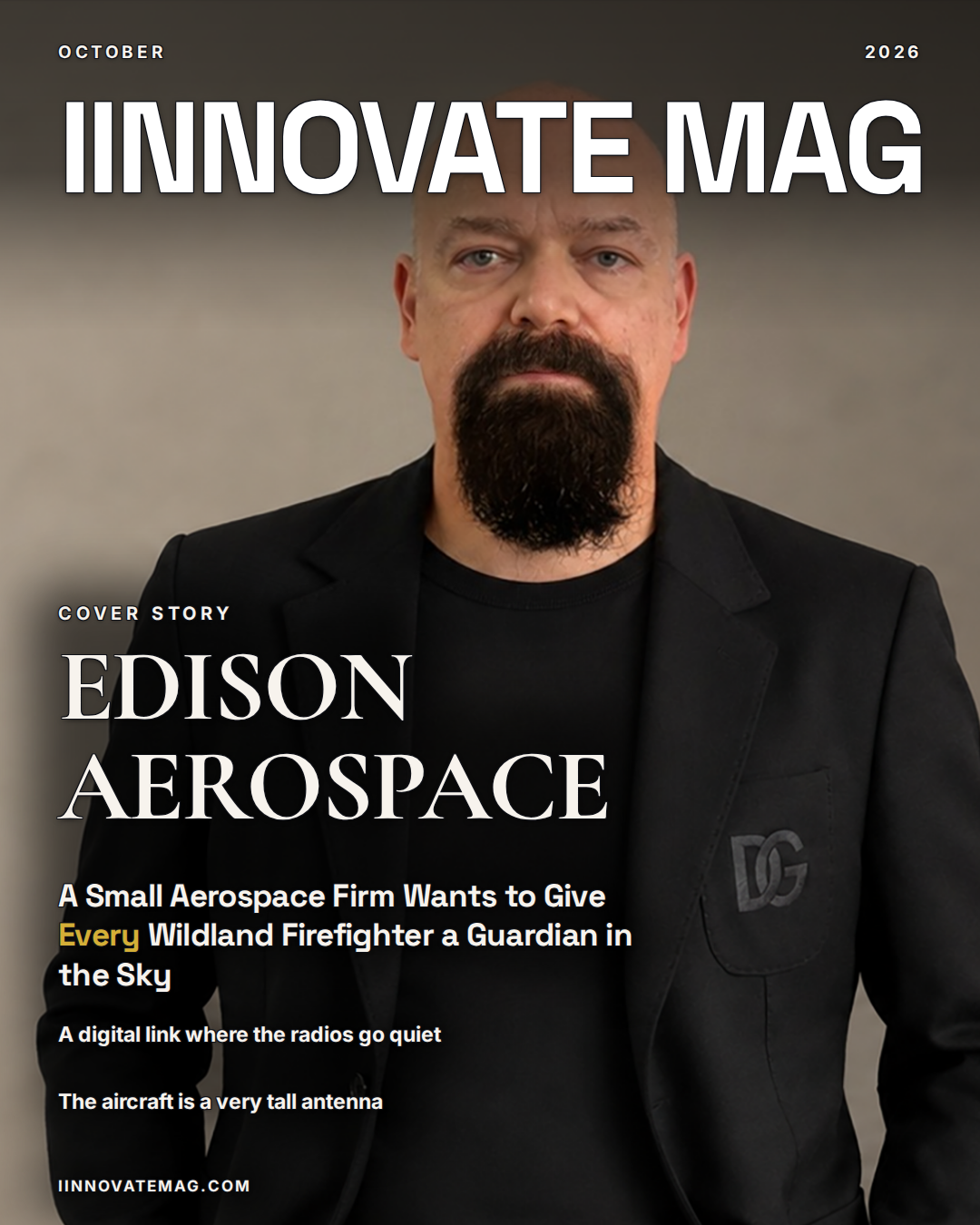
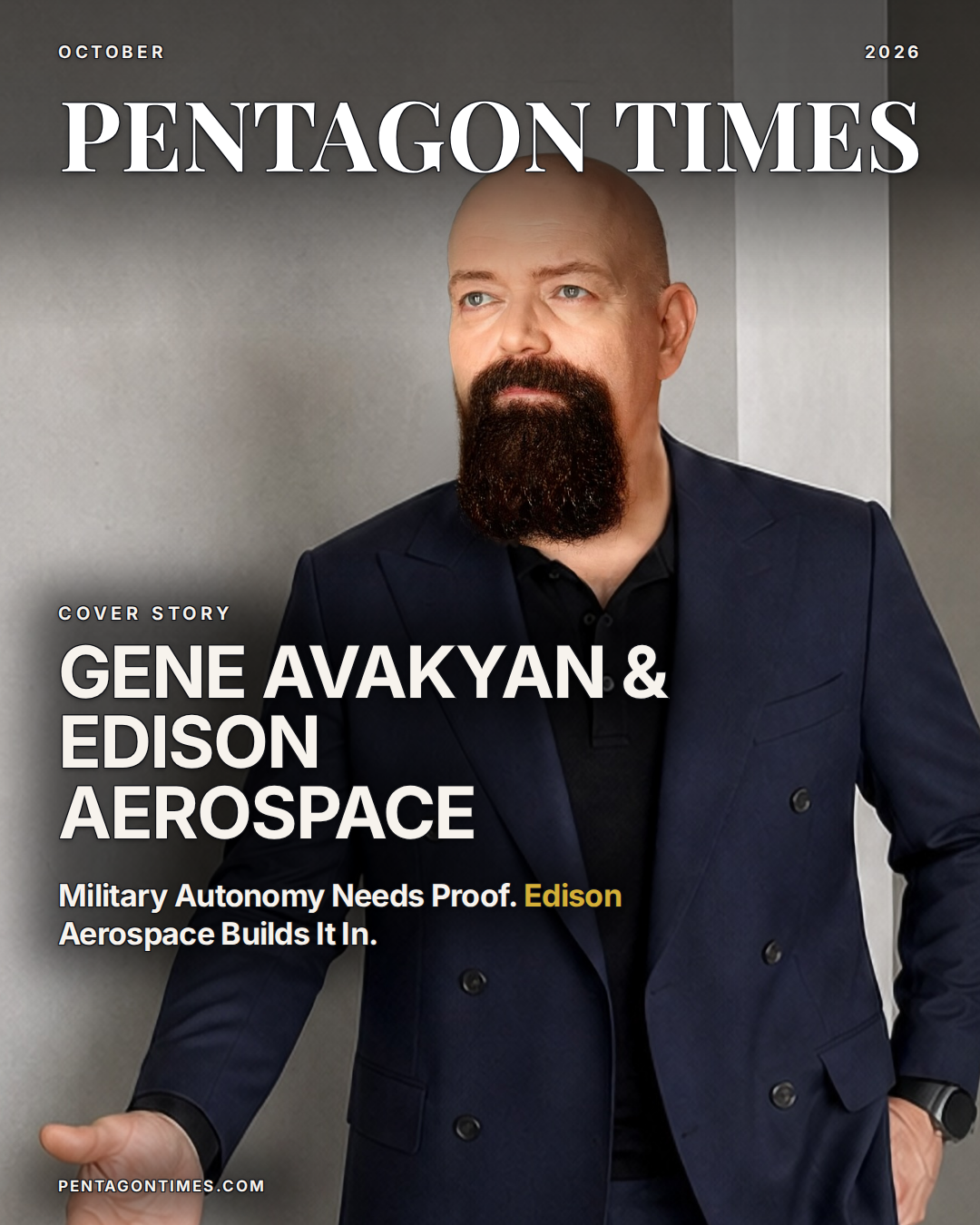
Edison Aerospace LLC, a Miami aerospace research and development company led by CEO Gene Avakyan, has built its defense work around that gap. Its proposals treat human judgment as something that needs evidence. The record-keeping is designed in from the start, not added after something goes wrong.
View Instagram post
Autonomy, Machine Vision, and Secure Networks Across the Services
Edison has designed autonomy, machine vision, and secure-communications concepts and proposed them across the military:
Navy (NAVAIR): VERDICT reconstructs autonomous missions, grades each step, and offers constrained re-planning for the next sortie. LATTICE is a multicore sensor-fusion architecture that reconciles tracks from different sensors in parallel.
Office of Naval Research: ACORN admits nodes to routing only when their evidence checks out. When a fleet network splits apart, only verified nodes carry traffic.
Army: MOSAIC, Edison's entry in the Army's xTechSearch 10 competition, links the bounded permission a human gave an autonomous system to the outcome that system recorded. A decision-management engine built on Edison's AgentPrizm platform keeps versioned evidence and replay for acquisition studies. For the Army Applications Laboratory, Black Swan Net studies how autonomous logistics teams resume valid, authorized task traffic after a network outage.
Air Force: The Black Swan Flightline Radio Network is a secure private 5G and Open RAN network for flightline crews and test teams at Edwards Air Force Base.
DARPA: TRACE sends compact, auditable intelligence, surveillance, and reconnaissance evidence over slow or jammed links.
Special Operations Command (via SOFWERX): A test-and-evaluation capability for rehearsing multi-agent missions, capturing evidence, and running debriefs.

Florida Defense Support Commission: Sea–Sky Fence studies how to detect small drones flying low over water near coastal military bases.
One Technical Spine
Read the list again and a pattern jumps out. Every proposal answers the same question from a different angle. Who gave the permission? What did the system see? Which nodes can be trusted? What happened, step by step, and what should change next time?
The work shares one spine. Black Swan handles device identity and secure delivery, so the right machines talk to each other and nothing else gets in. AgentPrizm keeps a record people can inspect, so every action can be traced back to its source. Edison's EDISON High-Endurance Autonomous Aircraft, a hybrid-electric airframe built on a distributed-electric design, provides a platform for dual-use autonomy.
Engineering comes paired with field experience. Edison's defense and autonomous-systems adviser is Lt. Col. Thomas R. De La Garza, U.S. Army (Ret.).
Why Traceable Autonomy Fits This Moment
AUTOWARCOM is taking shape through an interim effort, Project Agincourt, led by Defense Innovation Unit director Owen West. That is fast work, and it should be. The force is moving autonomy from scattered programs to a single command, and the systems it fields at scale will be judged by one thing above all: can a commander trust them?
Trust is not a feeling. It is a record. A drone swarm that loses its network and reconnects needs proof of which commands are still valid. A sensor that flags a target needs to show what it saw. A mission that goes wrong needs a debrief built on facts, not memory. The systems that can show their work are the ones commanders will say yes to.
That is the whole idea behind Edison's proposals. Autonomy that keeps evidence is autonomy that humans can actually command.
What Comes Next
All of these are proposals, not contracts. Each is in its sponsor's review process, and technical details stay private until decisions are made. More will follow as reviews move forward.