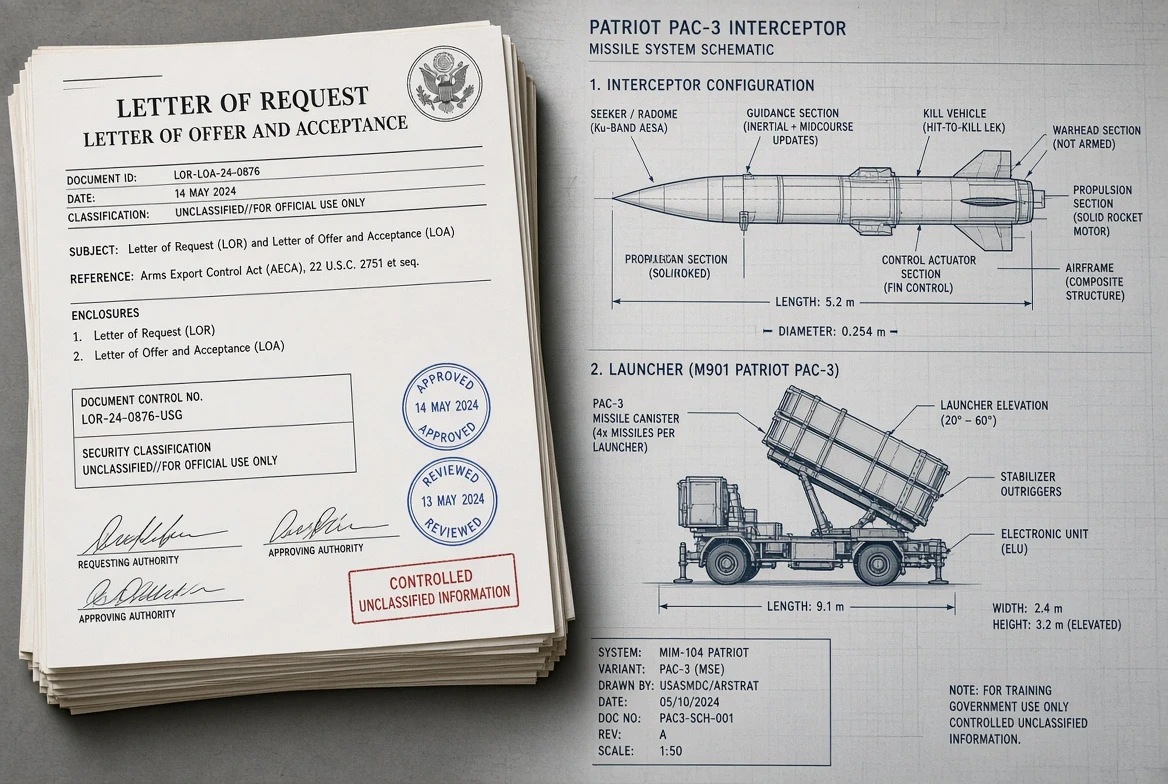
Other transaction agreements are contracting instruments the Department of Defense uses to buy prototypes and initial production outside most federal acquisition rules, under 10 U.S.C. 4022. Prototype obligations exceeded $16 billion in fiscal year 2024, per a GAO report dated September 3, 2025 — flexibility that draws in nontraditional defense contractors and risk that Congress keeps examining.
What is an other transaction agreement?
An other transaction, or OT, is a legally binding agreement that is not a standard procurement contract, grant, or cooperative agreement. A Congressional Research Service primer dated December 19, 2024 explains the design: OTs, "in contrast to traditional procurement contracts, are exempt from many federal procurement laws and regulations." Those exemptions give DOD "greater flexibility in how OTs are structured, solicited, negotiated, and awarded," but they also "render inapplicable various regulatory measures intended to promote transparency, accountability, and competition in government contracts."
That trade-off is the whole argument in miniature. A traditional contract under the Federal Acquisition Regulation (FAR) — the government's standard procurement rulebook — carries certified cost and pricing data requirements, procurement integrity rules, and protest rights that assume a regulated buyer-seller relationship. An OT lets a program office and a company negotiate terms closer to a commercial deal, which is why startups that would never bid on a FAR-based solicitation sometimes sign one.
What can DOD actually use OTs for?
Statute limits the tool to three activities. According to the CRS primer, DOD can generally use its OT authorities for "conducting research, developing prototypes, and starting follow-on production of successful prototype projects." Research other transactions rest on a separate authority, and the prototype authority in 10 U.S.C. 4022 is the one that matters for weapons and software programs.
Follow-on production is the built-in bridge from experiment to scale. If a prototype OT succeeds, the department can award a production OT without a full competition — a deliberate incentive Congress wrote into law to reward programs that demonstrate something real. GAO's September 2025 review of 18 weapon systems found that ten planned to switch to standard FAR contracts for production instead, with officials citing better insight into contractor costs and reduced risk of overpayment.
How does a project move from prototype to production?
The statutory design funnels OTs through escalating approval gates as dollar values rise, with congressional notification attached at the top tier.
- Entry. A program office, or a consortium managing members' submissions, solicits prototype proposals under 10 U.S.C. 4022, tailoring intellectual property and cost terms to the deal.
- Award. The prototype OT is signed; below $100 million, standard contracting-official approval applies within the department.
- Elevated approvals. Per 10 U.S.C. 4022, projects over $100 million but not over $500 million require a written determination that the authority "is essential to promoting the success of the prototype project," and projects over $500 million require a determination that the authority "is essential to meet critical national security objectives," with congressional defense committees notified in writing at least 30 days before the authority is used.
- Follow-on production. A successful prototype can convert to a production OT or a FAR-based contract; follow-on transactions over $100 million require a written covered-official determination and congressional notification.
- Oversight. GAO and the department's inspectors general audit the portfolio, and unsuccessful bidders can protest OT awards at GAO.
Who uses OTs, and how much money is involved?
Use has grown steadily. The CRS primer notes DOD "has used its OT authorities with increasing frequency in recent years, which has prompted debate among Members of Congress about whether to increase statutory limits on their use." GAO's fiscal year 2024 figures quantify the scale: prototype OTA obligations exceeded $16 billion, and the department reported about $2 billion in production OTA use.
The Defense Innovation Unit (DIU) — the department's Silicon Valley-facing organization — and the Defense Advanced Research Projects Agency (DARPA), the Pentagon's advanced-projects agency, are statutory OT users alongside the military departments. Much of the volume flows through consortia, where a manager runs a single membership agreement and many companies compete for individual task orders underneath it.
What are the accountability concerns?
GAO's core finding in September 2025 was about visibility, not legality. The department, GAO reported, "does not know the extent to which these prototype OTAs directly resulted in production awards," because it does not track the standard production contracts that follow prototype OTs. Without that tracking, GAO concluded, DOD "cannot assess the extent to which OTAs are delivering capabilities to the warfighter."
The same flexibility that attracts new entrants also relaxes cost oversight. GAO cautioned that the tailored terms can heighten risk, "such as by reducing oversight of contractors' costs." Officials GAO interviewed made the same point from the inside: OTAs "do not ensure successful outcomes," and a well-written agreement cannot compensate for weak acquisition planning. GAO recommended a systematic process for tracking follow-on production, and DOD agreed with both of its recommendations.
How do OTs differ from FAR contracts in daily practice?
The differences show up in the paperwork a company actually signs. A FAR contract carries government-unique clauses by default: certified cost or pricing data above a threshold, stringent intellectual property regimes written for procurement, and termination-for-convenience and audit regimes that commercial firms often price into their overhead. An OT leaves each of those to negotiation, which is why a software company can accept milestone-based payments and commercial-style data rights without building a government compliance shop first.
For program offices, the practical gain is schedule. A consortium-based OT solicitation can move from white paper to award in weeks, while a FAR-based request for proposals moves in months. The practical cost is leverage: once the department is invested in a prototype, its negotiating position at the follow-on stage depends on how well the original agreement was drafted — which is exactly where GAO's cost-oversight concern bites.
What happens when a losing bidder protests?
OT awards are protestable, and the protests have shaped how the authority is used. Companies excluded from a consortium task order or a prototype award can file a bid protest at GAO, which adjudicates whether the agency followed its own solicitation terms. Early in the tool's growth, protests tested whether OT solicitations had to describe evaluation criteria with procurement-like clarity; GAO's decisions generally held agencies to the terms they wrote, while accepting that the underlying statutory flexibility left agencies freer than under the FAR.
Protest exposure is one reason well-run OT solicitations now look more like simplified FAR competitions than like handshake deals. The CRS primer devotes a section to how OT awards may be protested, a signal that Congress treats this as a mature instrument rather than an experimental one. For readers tracking a specific program, the protest docket is public: it shows which OT awards drew challenges and how GAO resolved them, an accountability layer that partially offsets the reduced cost transparency GAO flagged.
Why does Congress keep revisiting this authority?
Because OTs sit exactly where two goals collide: speed and accountability. Committees want the department able to reach companies that will never master the FAR, and they want to know, in dollars and delivered capability, what the instrument achieves. The 2025 GAO report shows the second half of that bargain is still unfinished — the money is visible, the outcomes are not.
The primer records the live debate plainly: DOD's increasing use of OT authorities "has prompted debate among Members of Congress about whether to increase statutory limits on their use." The dollar-threshold gates in 10 U.S.C. 4022 — $100 million and $500 million — are where that debate lands in statute, and every GAO report on outcomes becomes evidence for whichever side of the speed-versus-oversight argument committees are making that year.