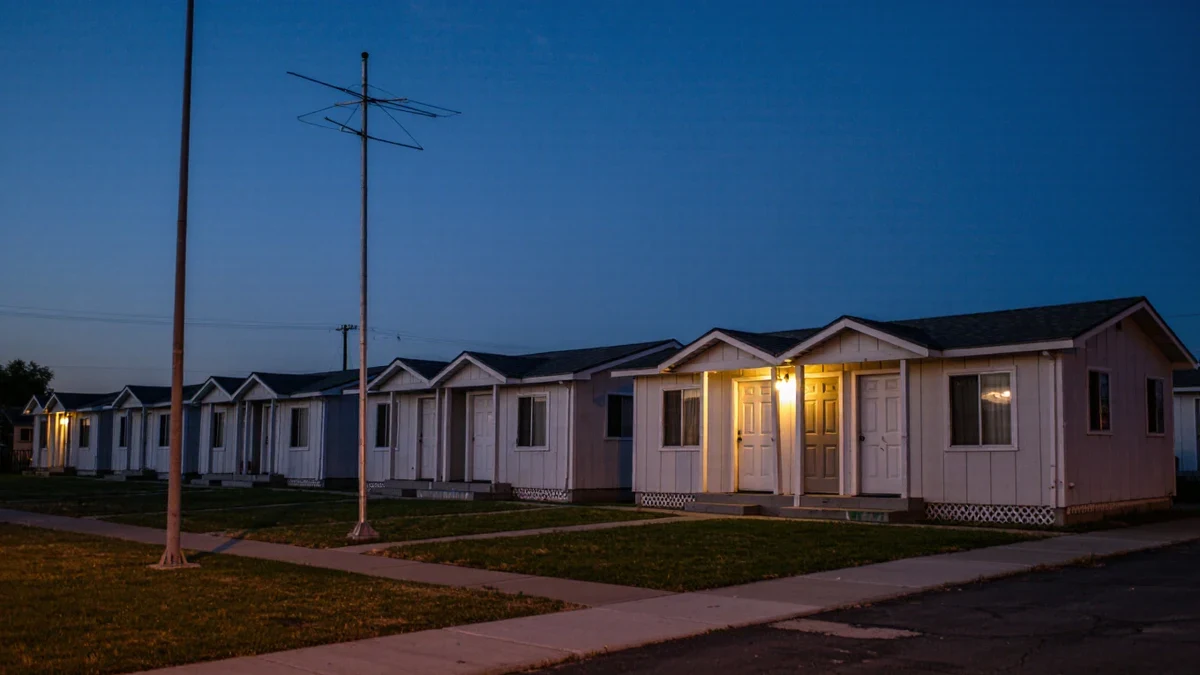
Basic Allowance for Housing, or BAH, is the monthly allowance that lets members live off base, and its legal basis is 37 U.S.C. 403, amended directly by Congress whenever the benefit changes. The housing it touches is largely private: private companies own and operate 99 percent of family housing at domestic installations, roughly 203,300 units, per the Government Accountability Office.
What is the statutory structure?
Congress writes the allowance in title 37 of the U.S. Code. Section 403 sets the framework for paying a basic allowance for housing to members of the uniformed services, and it also carries the protections that are easy to miss: dependents of a member who dies on active duty may continue to receive the allowance under defined conditions, including families not occupying government housing on the date of death. Those survivor provisions run alongside the everyday rate machinery.
Legislation continues to target the rate-setting side. Senate bill S.1122, introduced March 25, 2025 by Senator Warnock and referred to the Armed Services Committee, would amend title 37 to increase the basic allowance for housing inside the United States, per the published bill text. It is a one-line purpose with a large constituency, and it reflects the gap members experience between allowance schedules and local rents.
How does BAH interact with privatized housing?
Since the Military Housing Privatization Initiative of the 1990s, most family housing on domestic bases has been owned and operated by private companies under long-term contracts, with members' allowances flowing to the project owners as rent. GAO's oversight record shows where that structure strains. In its report on the privatized housing program, GAO found that DOD has taken steps to implement statutory requirements but gaps in guidance and training remain, contributing to inconsistencies in how inspectors rate homes, so that homes with similar issues receive different ratings.
The GAO review, which made 19 recommendations, found DOD generally concurred and described related actions, per the April 2023 report. The significance for BAH is direct: when the allowance is the revenue stream for privatized projects, oversight of housing conditions and oversight of the allowance cannot be separated.
What questions should members actually ask?
Published rules, not unit folklore, answer most BAH questions.
- What governs the payment? Title 37 and DOD allowance policy set the payment by grade, dependency status, and location.
- What happens after a PCS move? Entitlement changes with the new duty location, which is when rate differences bite.
- What protections exist on station? Published DOD policy provides continuity protections for members whose local rate drops while they stay at the same station, per department guidance.
- Who resolves privatized housing disputes? The chain of command plus the installation's privatized housing dispute process, with GAO-documented oversight at the department level.
Congress, for its part, keeps returning to adequacy: bills like S.1122, GAO recommendations on oversight, and annual authorization provisions all treat the allowance as a readiness and retention lever. The amounts change with each cycle; the statutory machinery underneath them does not.
How did military housing get to this structure?
The privatized housing system exists because government-owned family housing aged faster than Congress appropriated to replace it. In the 1990s, lawmakers authorized the Military Housing Privatization Initiative, letting the services contribute land and assets to private ventures that would build, own, and operate family housing over decades, financed in part by the members' housing allowances flowing through as rent. The ownership figure GAO documents, 99 percent of domestic family housing in private hands, is the endpoint of that policy choice.
The choice solved a construction problem and created an oversight one. Private operators answer to investors as well as to the government, and the department's leverage runs through contract terms, tenant protections, and inspection regimes rather than through direct command authority. GAO's finding that inconsistent inspection ratings persist despite statutory requirements shows the oversight layer still maturing, and each GAO recommendation in that chain targets the same weakness: making contract-level accountability produce consistent, comparable results across installations.
Where does BAH sit in the compensation debate?
The allowance is compensation, but it behaves like a housing program, and that dual identity drives the policy arguments. Advocates for bills like S.1122 argue the allowance should track real local market rents, including in fast-appreciating markets near large installations. Others point out that raising the allowance in tight markets can bid rents up further when military populations concentrate demand, a dynamic that oversight bodies have examined. Both arguments accept the same premise: the allowance is a lever with market effects, not just a paycheck line.
For retention, housing is repeatedly cited in quality-of-life reviews as a first-term decision point, which is why authorization bills keep returning to it. The statutory machinery, 37 U.S.C. 403 and the policies issued under it, will absorb whatever Congress decides; the GAO oversight record is the running audit of whether the money buys the housing it promises.
One further wrinkle deserves notice: the allowance is untaxed, which makes it more valuable than the same figure in taxable pay, and it generally ends with the service member's move or separation, so households planning purchases treat it differently from salary. Survivor provisions in the statute exist precisely because the payment's abruptness otherwise lands on a grieving family. These edges are where published rules, rather than unit-level assumption, determine what a household actually receives.