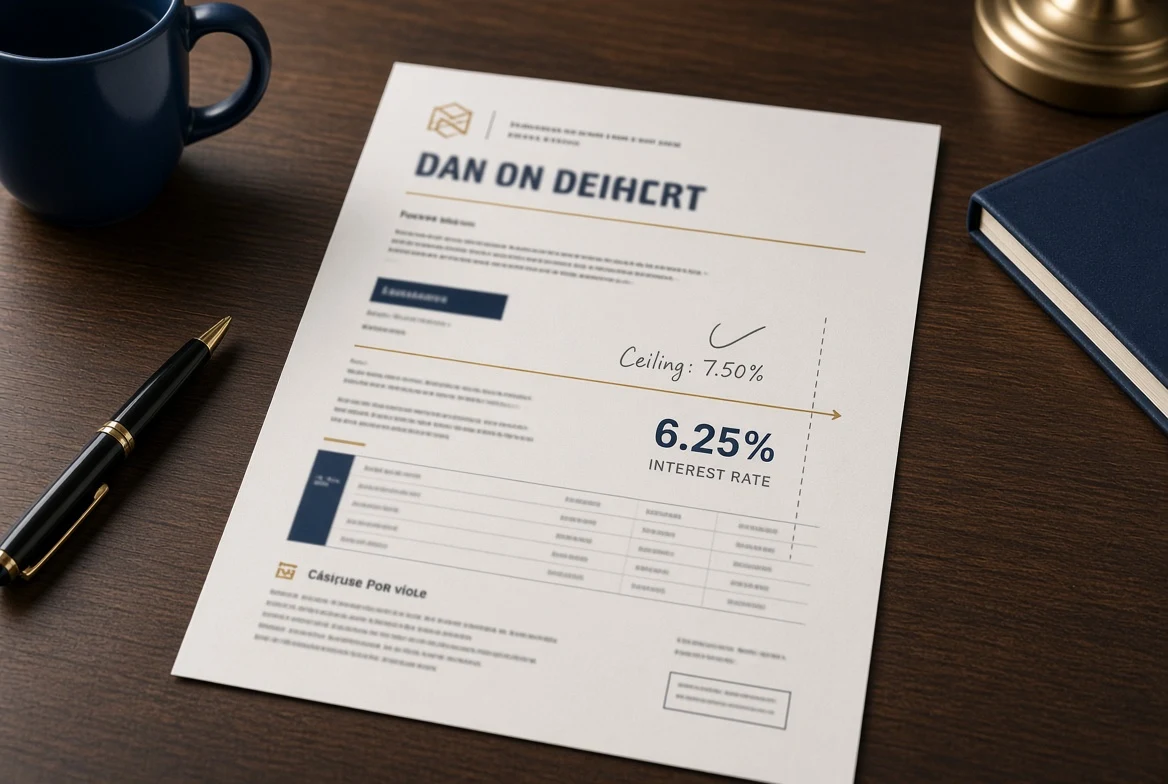
The VA home loan program's basic entitlement is $36,000 — not a borrowing cap but the maximum the VA will pay a lender on loans of $144,000 or less, per VA published guidance. With full entitlement there is no loan limit, and the one-time funding fee runs 2.15 percent for first-time use with a low down payment.
What is a VA-backed home loan?
It is a loan made by a private lender and partially guaranteed by the VA, not a loan issued by the government itself. "VA direct and VA-backed Veterans home loans can help Veterans, service members, and their survivors to buy, build, improve, or refinance a home," the department explains on its home loan overview page, and "nearly 90% of VA-backed loans are made with no down payment." The guaranty stands behind the lender, which is why the program can support zero-down financing that conventional underwriting often cannot.
Eligibility runs through service history and is documented with a Certificate of Eligibility, or COE. "Your Certificate of Eligibility (COE) for VA home loan benefits shows the amount of your entitlement for a VA home loan guaranty," the VA states on its entitlement page. Survivors of certain deceased veterans are eligible for the COE as well. The department's pages carry the controlling rules; lenders may add their own credit and income overlays on top.
How do entitlement and loan limits actually work?
Entitlement is the guaranty amount, and the VA is explicit that it is not a purchase budget. "$36,000 isn't the amount you can borrow. It's the maximum amount we'll pay your lender if you don't pay them back on a loan that's $144,000 or less," per the VA's entitlement and limits page. Above that loan size, the guaranty is generally 25 percent of the loan amount.
Loan limits apply only in the reduced-entitlement case — typically a borrower who still has an active VA loan or has not restored entitlement after a past default. "You have full entitlement — You don't have a loan limit (as long as you can afford the loan amount and the property appraisal supports the purchase price of the home)," the page states. That structure, in place since 2020, is why county-by-county conforming limits matter to some VA borrowers and not others.
What does the funding fee cost, and who is exempt?
The funding fee is a one-time charge due to the VA at closing, and it can usually be rolled into the loan balance. "The VA funding fee is a one-time payment that the Veteran, service member, or survivor pays on a VA-backed or VA direct home loan," per the VA's funding fee page. For purchase and construction loans with a down payment below 5 percent, the published rates are 2.15 percent on first use and 3.3 percent after first use; putting at least 5 percent down lowers the purchase rate, and Native American Direct Loans carry a 1.25 percent purchase rate.
Exemptions are categorical rather than means-tested. Borrowers are exempt if they are "receiving VA compensation for a service-connected disability," or meet other listed conditions such as qualifying survivor status, the page states. Because the fee is a percentage of the loan amount, exemption status is often the single largest cost variable in a VA loan quote, and it is verifiable from the COE before application.
Which other loan types carry which fees?
The funding fee schedule varies by loan type, and several rates are flat regardless of down payment or prior use. The published table lists interest rate reduction refinancing loans (IRRRL) at 0.5 percent, manufactured home loans not permanently affixed at 1 percent, loan assumptions at 0.5 percent, and vendee loans for purchasing VA-acquired property at 2.25 percent, per the VA's funding fee guidance. The Native American Direct Loan carries 1.25 percent for purchase and 0.5 percent for refinance, and the page notes those rates do not change with down payment or prior program use.
Refinancing rates have their own rule: for refinancing loans generally, "the VA funding fee rates for refinancing loans don't change based on your down payment amount," the page states. One quirk matters for prior users — a veteran who used a VA loan only for a non-affixed manufactured home still pays the first-use rate on a later purchase. The fee schedule is federal policy, published by the VA, and identical across lenders, which makes it the one cost line in a VA loan quote that should never vary between offers.
What can change a borrower's entitlement status?
Full entitlement and reduced entitlement are states, not grades, and borrowers move between them. Full entitlement — no loan limit — applies to a borrower who has never used the benefit or who has restored entitlement after a prior VA loan is repaid in full and the property sold. Reduced entitlement applies when entitlement is still tied up, and it is in that state that county loan limits re-enter the picture on the VA's entitlement page, which walks through the full-entitlement and reduced-entitlement cases side by side.
The practical consequence is down-payment arithmetic. A borrower with full entitlement can seek a zero-down loan at any price the appraisal and underwriting support, per the VA's rule that there is no loan limit "as long as you can afford the loan amount and the property appraisal supports the purchase price of the home." A borrower with reduced entitlement may need a down payment to cover the gap the guaranty no longer spans, and the page's guidance on restoring entitlement — paying off the prior loan and disposing of the property — is why entitlement status, not the county limit, is the first question a VA-savvy lender asks.
What about closing costs — who sets them?
The VA sets the guaranty and the fee; the market sets the rest. "We don't determine most details of your home loan. Your home loan lender will determine these details of your home loan: Interest rate. Discount points," the funding fee page states, along with other closing costs, and notes that "these details may vary from lender to lender." That variance is why the department frames loan shopping as part of the process: the VA benefit is the guaranty, not a price.
Buyer and seller can negotiate who pays which closing charges, and the VA's list of negotiable items includes real estate professional commissions, loan origination fees, discount points or temporary buydown funds, credit report fees, the VA appraisal fee, hazard insurance, real estate taxes, state and local taxes, and title insurance. For borrowers comparing offers, the fixed reference points are the funding fee schedule, the guaranty math, and the appraisal requirement; everything else is quote-dependent. Sellers may also concede costs within lender limits, which the VA's negotiability language is what makes possible.
How does a VA-backed purchase actually proceed?
- Obtain the Certificate of Eligibility from the VA, which documents entitlement status.
- Choose a VA-approved lender and complete credit, income, and debt underwriting to the lender's standards.
- Sign a purchase contract on an eligible property; the VA requires the home to be a primary residence.
- Order the VA appraisal, which checks value and minimum property requirements.
- Close the loan, paying or financing the funding fee unless exempt, with closing costs negotiable between buyer and seller.
The department sets the guaranty rules and the fee schedule; it does not set interest rates, discount points, or most closing costs. "We don't determine most details of your home loan. Your home loan lender will determine these details," the VA notes, listing rate, points, and other closing costs as lender-set terms on the funding fee page.