Ebbing Air National Guard Base in Fort Smith, Arkansas, is on track to host 36 F-35s and 12 F-16 aircraft once a Supplemental Environmental Impact Statement is finalized, an expansion adding 271 personnel and 325 dependents, per an April 17, 2026 Talk Business & Politics report. The base has trained Polish F-35 pilots since December 2024.
What Is Ebbing's Mission Today?
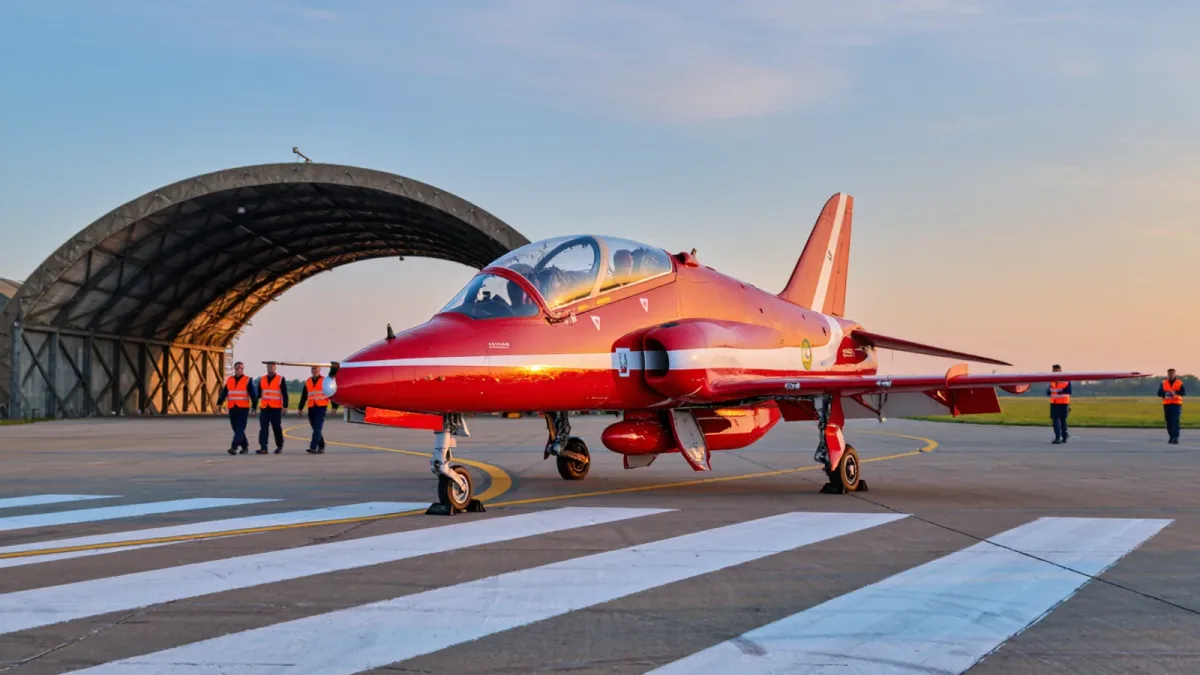
The installation is the Department of the Air Force's designated home for F-35 foreign military sales training. Two Polish F-35s landed at Fort Smith on December 23, 2024, arriving "as part of the Foreign Military Sales Mission" with the jets to be "used to train Polish pilots," per a 188th Wing release published on DVIDS. The first Polish student pilots completed training there in May 2025, and the company that builds the jet describes Poland as "the first FMS customer to train at Ebbing," to be "joined by Finland, Singapore, and Germany in the future," per Lockheed Martin's program site.
How Does the Expansion Actually Clear Review?
The regulatory gate is environmental, not budgetary. As Talk Business & Politics reported on April 17, 2026, the "finalization of the Supplemental Environmental Impact Statement (SEIS) is the primary regulatory 'green light' required to bed down an additional 12 F-35s for a total of 36 F-35 and 12 F-16 aircraft at Ebbing ANGB." The same SEIS analysis counts the human footprint: the document lists "adding '271 personnel and 325 dependents' connected to the mission," per the report. That pattern, preferred location first and National Environmental Policy Act review before steel, is how Air Force basing decisions have proceeded at Fort Smith from the start.
What Happens Next for the Base?
Local planning is already oriented to the end state. The April 2026 reporting projects that "an additional 271 housing units may be demanded by the end state of 2029 under this alternative," a figure that turns a Pentagon basing action into a school-enrollment and housing question for the Fort Smith region. The department has not published a completion date for the SEIS, and timing for the additional aircraft remains unannounced; what is documented is the sequence, the fleet total, and the personnel numbers carried in the environmental analysis.
Why Does One Base Carry the Whole Allied Mission?
Consolidating foreign F-35 training at a single installation concentrates instructors, simulators, and the maintenance pipeline in one place, which shortens the training cycle for partner air forces that buy the jet through foreign military sales. Poland's program shows the model working end to end: aircraft arrived in December 2024, the first pilot class graduated on May 9, 2025, and follow-on customers Finland, Singapore, and Germany are queued behind it, per the program site's account. For the Air Force, Ebbing also keeps allied training off the operational squadrons' ramp space, a constraint that has grown as more countries join the program.
The expansion review now underway would follow the playbook that brought the mission to Arkansas in the first place: an environmental analysis quantifying aircraft, personnel, dependents, and housing demand, followed by a final decision that locks the beddown. Until the SEIS is finalized, the 36-jet and 12-F-16 end state remains the documented planning figure rather than a signed outcome, and the numbers that matter locally, 271 personnel, 325 dependents, and 271 potential housing units by 2029, all trace back to that single analysis.