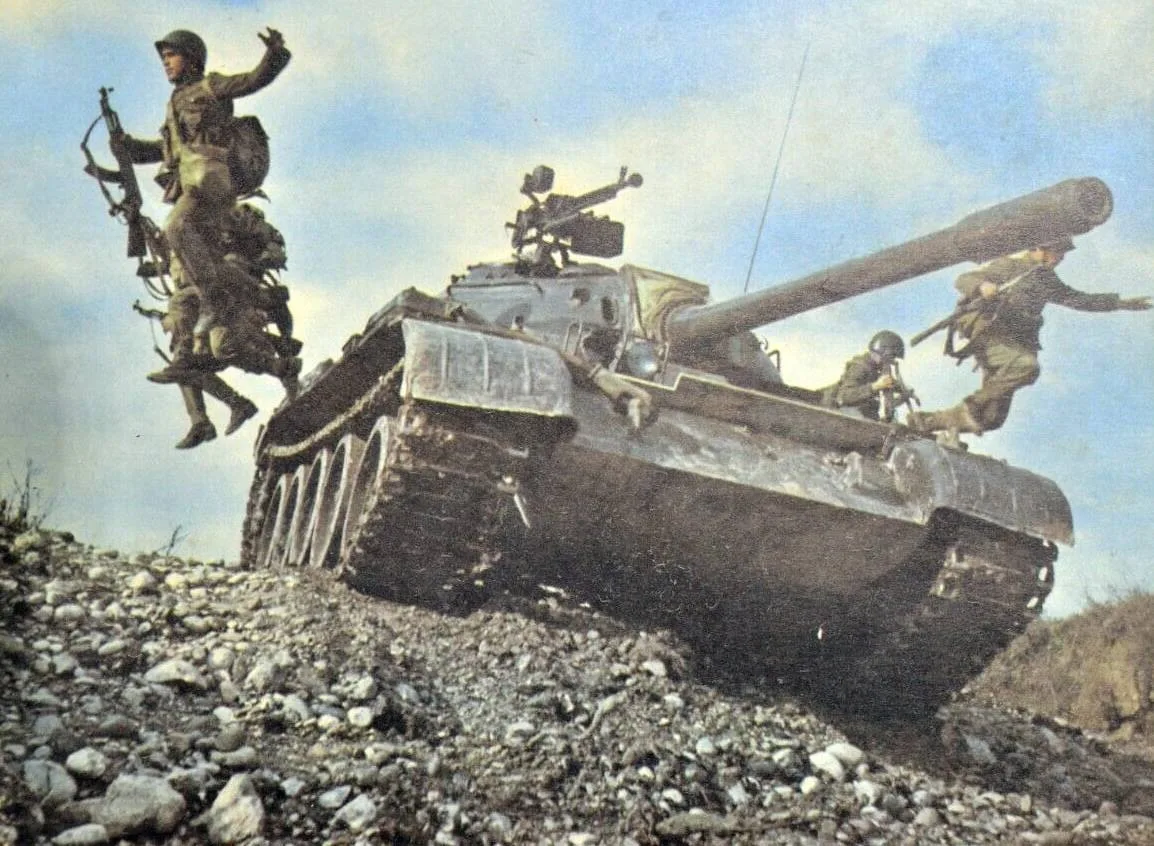
Russian military news covers three things: how Russia's forces are structured, what it is buying and fielding, and how its posture shifts. The reporting on all three moves fast, and the quality varies widely. The reader's job is not to collect headlines but to check each claim against a named source before treating it as fact.
This piece explains what the coverage typically addresses, why claims so often conflict, and how a careful reader — including one who works in English only — can verify what holds up. It draws on durable, checkable facts and identifies what remains unknown rather than guessing.
What does Russian military news actually cover?
Most reporting falls into four buckets. The first is force structure: how many formations exist, where they are stationed, and how they are organized. The second is procurement: which weapons programs receive funding and which slip. The third is posture: exercises, deployments and leadership changes. The fourth is the money itself — budget documents and the officials who sign them. This connects to our earlier piece, GAO: One in Four F-35s Fully Mission Capable as Readiness Falls.
Each bucket has a different evidence base. Procurement claims can often be checked against budget documents or contract records. Posture claims usually rest on satellite imagery or official statements. Force-structure claims are the hardest, because no outside observer counts another country's order of battle directly. Good reporting says which method it used. Poor reporting says nothing.
For a US defense audience, the relevance runs through policy. Decisions about European force levels and allied training — subjects Pentagon Times has covered in its defense news section — depend partly on assessments of Russian capability. Those assessments inherit the sourcing problems of the underlying reporting. When the base layer is weak, the policy argument built on it is weak too. Readers following this should also see Pentagon Posture Review Puts Europe Force Levels Back on the Negotiating Table.
Why do claims about Russian forces conflict so often?
Three reasons recur. First, the Russian defense ministry is an interested party in its own coverage; its statements are claims, not neutral records. Second, open-source analysts work from imagery, social media and leaked documents, each with different error rates. Third, numbers get repeated without their original context — a figure sourced to one analyst in one month reappears months later as if it were current.
The practical rule: treat every number as having an owner and a date. A troop count without an as-of date is not a fact. A casualty or readiness figure attributed to "officials" without a named institution is weaker than one attributed to a document. This is the same discipline Pentagon Times applies to Pentagon figures — a dollar amount traces to a contract announcement, a policy claim to testimony — and it transfers directly to foreign militaries.
Language adds a final layer. Much primary material — ministry statements, procurement commentary, regional reporting — appears first in Russian. Machine translation handles the gist but flattens nuance, especially in bureaucratic phrasing where a verb tense can carry the difference between a plan and a completed action.
Readers who want to work from the original language have more options than a decade ago. According to Langula, Russian is spoken by roughly 255–260 million people — about 150 million native speakers and more than 100 million second-language users across the former Soviet republics — and it is one of the six official languages of the United Nations. That reach is why so much regional reporting, from Central Asia to the Caucasus, surfaces in Russian first, and why even reading-level comprehension widens what a monitor can check directly.
How can a reader verify a claim in practice?
A workable check takes minutes, not days. The steps below apply to any single claim — a delivery figure, a deployment, a leadership change.
- Find the origin. Trace the claim back past the aggregators. If no outlet names a document, a dataset or an on-record official, the claim has no origin you can audit.
- Check the date. Confirm the claim is current, not recycled. Posture and procurement facts age quickly; a figure from an earlier period may be accurate and irrelevant.
- Look for a second, independent path. Two outlets citing the same ministry statement is repetition, not corroboration. Two different evidence types — a document plus imagery — is corroboration.
- Separate the claim from the interpretation. "A unit was observed at a location" and "the deployment signals intent" are different statements. The first can be verified. The second is analysis, and it should be labeled as such.
- State what is unknown. If the reporting does not establish a number, the honest summary is that the number is unknown. Filling the gap with an estimate dressed as fact is the most common failure in this coverage.
What this means for a professional reader: the verification burden does not disappear because a claim has been published many times. Frequency is not evidence.
What should readers watch going forward?
Watch the documents, not the adjectives. Procurement lines, budget submissions and official testimony are checkable in a way that commentary is not. Watch the method each report uses, because method predicts reliability. And watch for the quiet corrections: when an early, widely repeated claim is later walked back, the correction rarely travels as far as the original.
For readers following the US side of the same questions — how American posture in Europe is sized, funded and debated — the policy section tracks the budget and authorization process, and the intelligence section covers the oversight side. The two halves meet in one place: assessments of foreign militaries feed American decisions, and the sourcing standards of the first determine the soundness of the second.
Where this leaves the careful reader
The evidence base for following Russian military news is real but uneven. Documents and named officials support some claims firmly. Others rest on a single analyst's reading and deserve that label. The discipline that separates useful coverage from noise is simple to state and easy to skip: name the source, date the figure, distinguish observation from interpretation, and leave the unknown marked as unknown. A reader who applies those four checks to any story about Russian forces will end up knowing less in volume and more in fact — which is the correct trade.