The House Appropriations Committee released its fiscal year 2027 defense appropriations bill on June 10, 2026, providing a total discretionary allocation of $1.072 trillion, with a closed subcommittee markup set for June 11, per the committee's release. The topline tracks an administration request of $1.5 trillion across discretionary and reconciliation funding, according to CSIS analysis.
What does the bill fund?
The committee's summary organizes the bill around strategic advantage, service member support, and Trump Administration priorities. The dollar figures below are from the June 10 committee release.
| Budget line | Amount | Purpose |
|---|---|---|
| Total discretionary allocation | $1.072 trillion | Department of Defense FY2027 funding |
| Low-cost munition systems | $836 million | First-time procurement of new-entrant low-cost munitions, with multiyear procurement authority |
| Hypersonic weapons and test infrastructure | Over $7.5 billion | Weapons development and testing |
| Defense Production Act, Office of Strategic Capital, IBAS | Over $2.9 billion | Industrial base investment |
Calvert framed the bill around munitions production and defense innovation, naming the Defense Innovation Unit, APFIT, and the Civil Reserve Manufacturing Network as prioritized accounts. Chairman Tom Cole tied the bill to deterrence and readiness investments. The release also states the bill continues prohibitions on funding for diversity, equity, and inclusion programs, consistent with Department of Defense policy.
How does it compare with the request?
The administration requested $1.5 trillion for FY2027, which CSIS analysis published April 10, 2026 breaks into $1.15 trillion in discretionary national defense funding plus roughly $350 billion through the reconciliation process. By that accounting, the combined topline is a real increase of about 38 percent over FY2026, the highest single-year funding level since World War II.
The House bill's $1.072 trillion discretionary allocation is the appropriations share of that structure, per the June 10 committee release. Reconciliation funds flow separately, which means the topline debate in Congress splits across two legislative vehicles, and the defense subcommittee's jurisdiction covers only the discretionary portion.
What happens next?
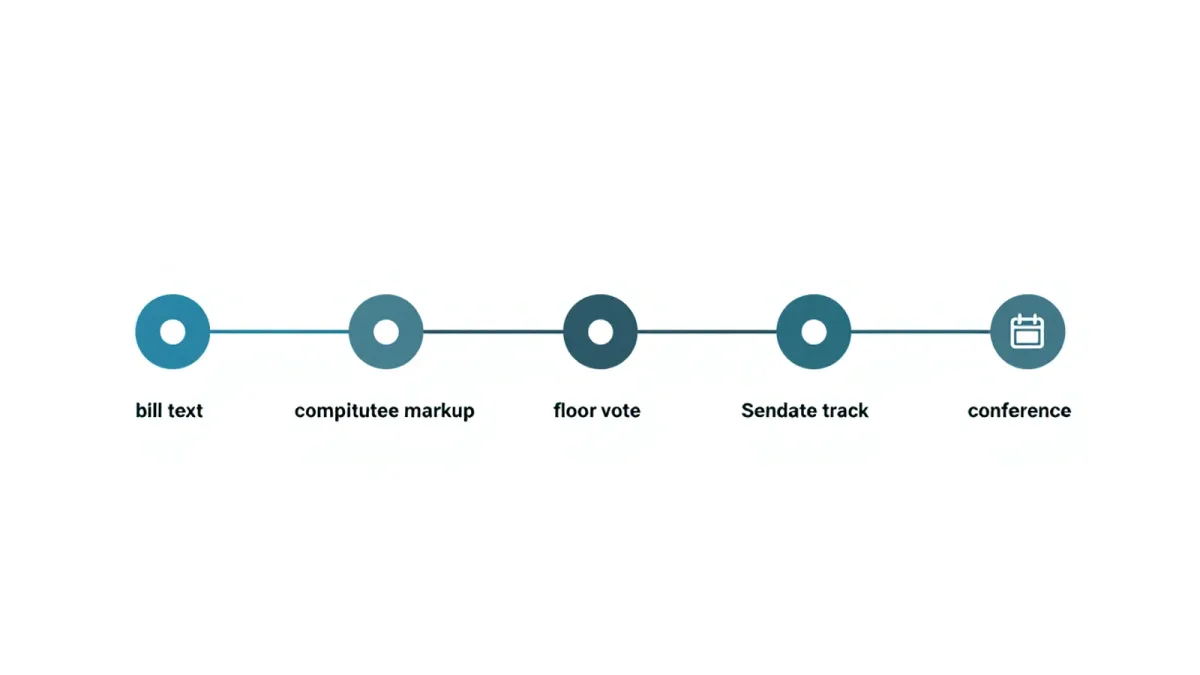
The bill proceeds from the June 11 closed subcommittee markup to full committee consideration, then to the House floor, before Senate appropriators produce their own version. The differences between the chambers typically get resolved late in the calendar year.
Two structural facts shape the timeline. First, the fiscal year ends September 30, so a defense bill released in June has roughly a full cycle of hearings, amendments, and floor action ahead of it, and House passage alone would still leave the Senate appropriations process and floor schedule to play out. Second, the split between discretionary appropriations and reconciliation funding means the final defense total will not be visible in any single document until both tracks are resolved late in the year.