Defense appropriations for fiscal 2027 entered the fall on a stopgap: House lawmakers advanced a continuing resolution on September 1, 2026, following the Senate, extending funding to December 11 and holding the Pentagon at fiscal 2026 levels, per published coverage of the vote. The full-year defense bill has passed neither chamber.
What does the stopgap actually do?
The continuing resolution keeps the government open but carries familiar restrictions. It ensures current weapons programs can be funded at fiscal 2026 levels and prevents a situation where civilians are furloughed and troops work without pay, per Breaking Defense's September 1 account. What a continuing resolution cannot do is start new programs or support the spending profile of a budget built on different assumptions, which is the core tension with the Pentagon's fiscal 2027 request.
The same account flags a fiscal cliff built into the arrangement: potential automatic cuts to reconciliation funds if certain money is not spent by October. That deadline matters because the Pentagon's two-track budget — base appropriations plus the mandatory reconciliation tranche — was built assuming both tracks would be enacted and obligating on schedule. A stopgap that freezes the base while the reconciliation money runs into an October spend-by date squeezes the department from both directions.
Where does the request stand?
The request itself is a two-part structure. The Pentagon is betting on a $1.15 trillion discretionary budget request with a further $350 billion coming from the reconciliation process, together adding up to a $1.5 trillion defense budget, while whether Congress can pass the full sum has remained uncertain, with the House yet to pass its version of the FY27 defense appropriations bill after moving it through committee in June, per Breaking Defense's August 27 preview of the fall agenda. That preview also catalogued a long list of unresolved defense funding items awaiting Congress on its return, from the stopgap to supplemental needs.
As of late September 2026, the state of play by measure is the practical scoreboard:
| Measure | Status | Source date |
|---|---|---|
| FY27 defense appropriations (House) | Reported out of committee in June 2026; not passed by the full House | August 27, 2026 |
| FY27 defense appropriations (Senate) | Behind the House in progress, per the same report | August 27, 2026 |
| Continuing resolution | Advanced by the House September 1, 2026, after the Senate; funds through December 11 | September 1, 2026 |
| $350 billion reconciliation tranche | Unenacted; subject to automatic-cut risk if unspent money hits October deadlines | September 10, 2026 |
What happens if the reconciliation money fails?
The Pentagon's own comptroller has described the fallback. Jules Hurst told Breaking Defense on September 10, 2026 that if Congress does not pass the full $350 billion reconciliation funding, the department is prepared to work with lawmakers to shuffle key priorities into the base budget, a plan that would require cutting or deferring investment elsewhere or pushing it to fiscal 2028, per that report. Hurst said it was too premature to know exactly what those decisions and trade-offs would require.
His framing of the choice, as quoted in the report, was blunt: the question would be what is more important to have money for in FY27, or whether it can wait for FY28, and he noted that some technological areas are evolving fast enough that some things need money right now while others need more research and development. A shuffle into the base budget is not a free move — every priority moved in displaces a priority already there, and the appropriators, not the comptroller, hold the pen.
Why does a stopgap cost the Pentagon even when it funds everything?
A continuing resolution is often described as harmless because it holds spending flat, but flat is not the same as right. The fiscal 2027 request was built on different priorities than fiscal 2026 law — new starts, production ramps, and the mandatory tranche's investment profile — and none of those can proceed at prior-year levels. A program that was planned to grow is held to its old size, and a program that was planned to end keeps drawing funds until full-year law says otherwise.
The administrative mechanics compound the mismatch. Obligation plans, contract award schedules, and hiring pipelines are all set against the assumption of enacted appropriations, and each month under a stopgap pushes decisions later into a fiscal year that is already underway. The December 11 boundary means the department could operate under prior-year funding for well over two months of fiscal 2027 before either a full-year bill or a longer stopgap resolves the question.
The reconciliation layer makes 2026 unusual rather than typical. Past stopgaps froze one budget; this one freezes the discretionary half of a two-track request while the mandatory half faces an October spend-by cliff. The comptroller's willingness to discuss moving priorities into the base budget is the department planning for the failure of its own preferred structure — a contingency that only exists because the two-track design put so much of the topline on a separate legislative path.
What should watchers track next?
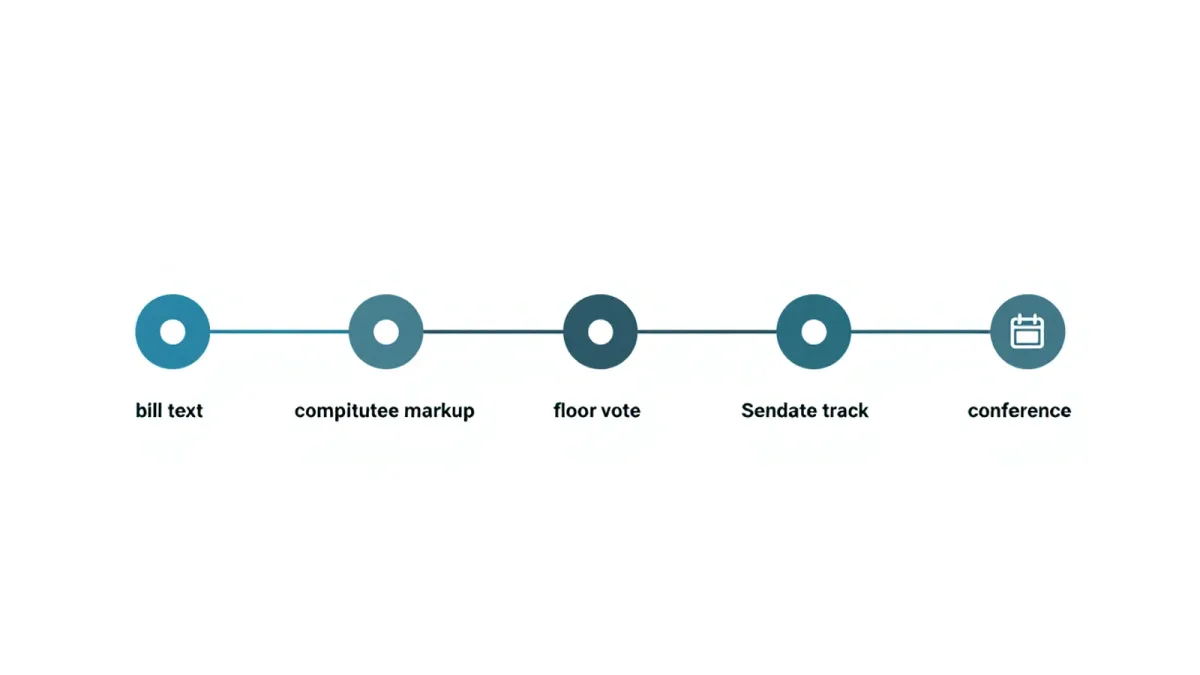
The document calendar from here is short and unforgiving. The stopgap expires December 11, 2026, which sets the outer boundary for enacting full-year appropriations before the department must plan around an entire fiscal year at prior-year funding levels. The House and Senate floor schedules for the defense appropriations bill have not been announced, and the reconciliation bill's fate in the Senate remains the largest single unknown in the $1.5 trillion arithmetic.
The second-order effects are already visible in program offices. Contractors and program managers plan obligations against enacted law, not requests, and a December boundary compresses decision-making across new starts, production ramps, and the priorities Hurst described. When the appropriations question is settled, the practical test will be which of the priorities moved into the base budget survived contact with the allocations, and whether the multiyear production commitments Congress has signaled interest in were funded at levels that let suppliers act on them. Between now and December 11, every marker — the Senate's appropriations schedule, the reconciliation bill's progress, and the October spend-by deadline inside the stopgap — is dated and public, which makes this one budget fight where the scoreboard updates in documents rather than in rhetoric.