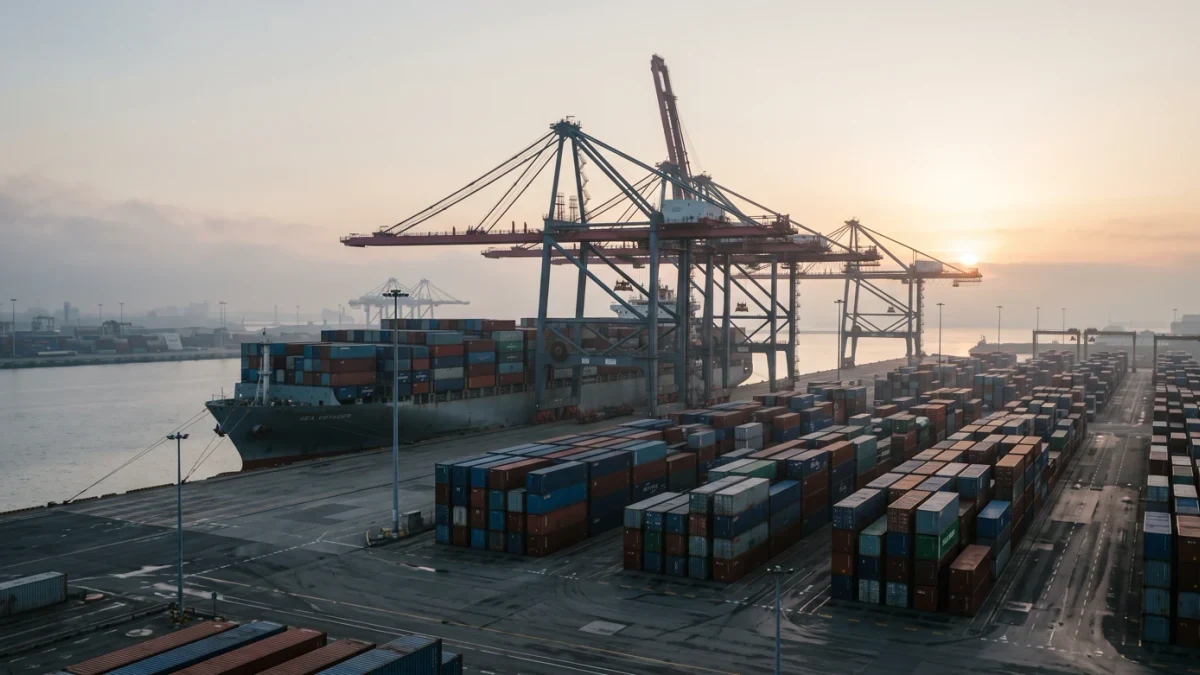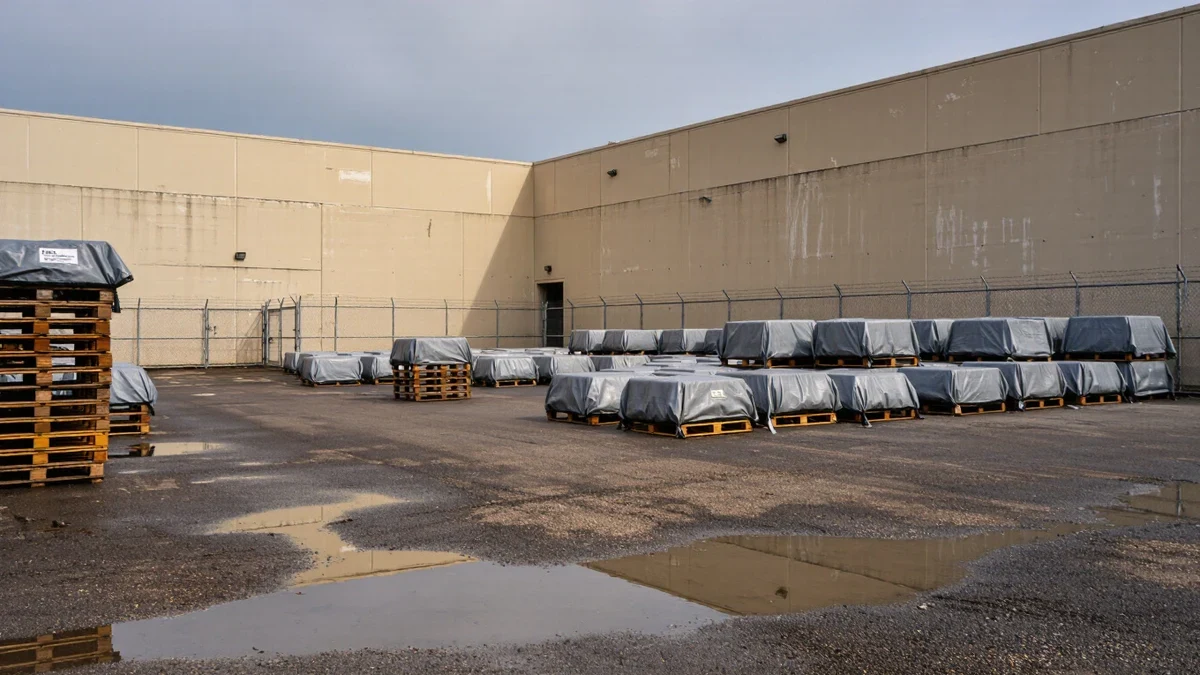
War reserves and prepositioned stocks are combat equipment stored in advance at strategic locations, on land and aboard afloat ships, so units can deploy in days rather than the weeks shipping from home would take, per the Government Accountability Office's published description of the Army Prepositioned Stocks program. It is a budget line and a policy commitment at once.
What are prepositioned stocks and why does the Army keep them?
The program exists to solve a physics problem. Heavy combat equipment moves slowly by sea, and the department's strategic mobility framework combines fast-moving personnel with pre-positioned materiel so forces can arrive already equipped. The Army Prepositioned Stocks program depends on prepositioned unit sets of equipment and sustainment stocks to enable troops to deploy rapidly and train with prepositioned equipment before beginning combat operations, and it supports the National Military Strategy as part of the Department of Defense's overall strategic mobility framework, per the GAO report on the program's afloat stocks.
The storage geography is the strategy. Land-based sets sit at diverse strategic locations near the plausible theaters of use; afloat sets ride ships positioned to move where the crisis actually breaks. A unit drawing a set still needs its personnel flown in, but the weeks of sealift that would otherwise separate a decision from a deployed brigade collapse into the days needed to draw equipment, draw ammunition and supplies from the sustainment stocks, and conduct the training the GAO description references before combat operations begin.
What does the stockpile cost?
The Government Accountability Office's 2008 review documents both the drawdown and the price of reversing it. At various stages of operations in Iraq and Afghanistan, the Army withdrew equipment from its stored stock sets around the world and from its afloat stocks, depleting a large portion of its prepositioned stocks, and the service could not provide complete costs and cost estimates for restoring the sets to a posture fully supporting the department's employment strategy — including a breakdown of the $3.3 billion estimate to reconstitute APS-3 requested in the fiscal year 2007 supplemental budget.
The estimated lines, per the same report:
| Cost line (FY2008 POM era) | Estimate |
|---|---|
| Full implementation of APS Strategy 2013 across the 2008 POM | $10.6 billion to $12.8 billion |
| Procurement within the FY2008 POM estimates | about $3.6 billion |
| Operations and support within the FY2008 POM estimates | about $4.2 billion |
| War reserve secondary items within the FY2008 POM estimates | about $2.8 billion |
Two features of that table generalize. First, war reserve secondary items — the spare parts held against wartime demand — carry their own line, because parts, not just vehicles, are what a drawn-down set runs out of. Second, the report records that the fiscal year 2008 POM did not include requests for APS reconstitution costs even after the drawdown, which is the budgeting gap the title of the report names.
What is inside a prepositioned set?
The GAO description divides the contents into two kinds of materiel, and the distinction drives the budget. Unit sets of equipment are the vehicles and major end items a combat formation needs to fight — what a brigade draws to become a brigade. Sustainment stocks are the consumables and repair items that keep a drawn set running: the war reserve secondary items that carried their own $2.8 billion line in the fiscal year 2008 POM estimates. A set without its secondary items is a static display; the parts line is what makes prepositioning a war-fighting tool rather than a storage strategy.
The afloat component adds a third element: the ships themselves. Afloat stocks ride vessels positioned to sail toward a crisis rather than waiting at a fixed site, which trades some maintenance convenience for geographic flexibility. The 2008 report's subject — the Army's afloat prepositioned stocks, including the APS-3 sets whose $3.3 billion reconstitution estimate was requested in the fiscal year 2007 supplemental — shows the cost profile of that flexibility: equipment stored at sea wears, gets drawn, and must be reconstituted like any other stock, with the added complication of ship schedules.
Training is built into the concept. The GAO text notes that the program exists so troops can deploy rapidly and train with prepositioned equipment before beginning combat operations — the interval between drawing a set and fighting with it is expected to include familiarization, which is why set readiness, not just set existence, is the standard the program is budgeted against.
How does a war reserve actually get used and refilled?
The cycle has four stages, and each one carries a distinct budget consequence:
- Procurement and modernization: unit sets are bought or refreshed with newer equipment during peacetime budgets.
- Storage and maintenance: sets are held at land sites and aboard afloat ships, with maintenance to keep equipment serviceable in storage.
- Drawdown: in crisis or conflict, units draw the sets and the stored posture is spent down, as the Iraq and Afghanistan-era withdrawals documented.
- Reconstitution: withdrawn equipment must be repaired or replaced, which is where the GAO found planning and budgeting gaps in the afloat program.
Each stage has a different owner and a different clock. Procurement belongs to the program offices and the services' multi-year budget builds; storage and maintenance belong to the installations and the ship operators who hold the sets; drawdown belongs to combatant commanders; reconstitution belongs to whoever can find the money — historically the supplemental process, as the fiscal year 2007 request for the afloat sets shows. The stages also fail differently: a storage failure is visible in condition inspections, while a reconstitution failure is invisible until the next crisis asks the stock a question it cannot answer.
That asymmetry is why audits keep returning to the refill stage. Drawdowns are decisions made under pressure with full visibility; reconstitution is a promise made afterward with no deadline attached. The GAO's finding that reconstitution costs were absent from the fiscal year 2008 POM, years into the Iraq and Afghanistan-era withdrawals, is the documented form of that gap.
How does Congress see the bill?
Prepositioning reaches Congress through the same budget documents as every other Army program, and the 2008 figures show the shape of the debate. The Program Objective Memorandum — the POM (Program Objective Memorandum) is the service's multi-year budget proposal, covering five years beyond the current request — carried the $10.6 billion to $12.8 billion range for full implementation of the APS Strategy 2013, alongside the roughly $3.6 billion procurement and $4.2 billion operations-and-support lines of the fiscal year 2008 estimates.
What Congress could not see, per the GAO, was the reconstitution bill. Officials stated the fiscal year 2008 POM did not include requests for APS reconstitution costs even though the drawdown had already happened, and they could not break down the $3.3 billion supplemental request for the afloat sets. Legislators funding prepositioning were therefore looking at a program whose past consumption was documented but whose repair bill was not yet in the ledger — the budgeting gap the report's title announces.
The supervision lesson generalizes. War reserves are attractive precisely because their peacetime cost is quiet, and their wartime value is loud. The GAO's finding is the failure mode of that bargain: the quiet years deferred the planning, and the loud years financed the repair through supplementals rather than planned budgets.
Why do prepositioned stocks matter to Europe policy in 2026?
Stored equipment in Europe only makes sense alongside the troops and transport meant to use it, and the 2026 strategy record has put that linkage in motion. The unclassified National Defense Strategy released on January 23, 2026 places homeland defense as the department's number one priority above the Indo-Pacific and seemingly signals cuts to come to US forces in Europe and South Korea, while denying a push toward isolationism and calling for greater burden sharing from allies, per Breaking Defense's coverage of the release. Where force levels fall, stored equipment follows or sits as an unexplained cost.
The strategy text does not address stock sites directly, and the department has not said how its Europe language will change specific prepositioned stock locations. The historical record counsels patience on any reconstitution promise: the 2008 GAO finding shows that even after a drawdown ends, restoring the stored posture requires planning and budgeting that had not been completed years into the effort. What is documented is the sequence — strategy first, force structure second, stockpiles third — and in early 2026 the first step of that sequence has visibly moved.